
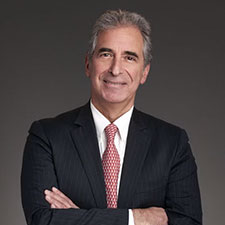
James I. Glasser
On May 15, 2026, the U.S. District Court for the District of Connecticut convened in ceremonial session at Bridgeport for the unveiling of the portrait of Senior U.S. District Judge Stefan R. Underhill. The portrait was presented to the court as a gift by Judge Underhill’s clerks. The ceremonial session was presided over by Chief Judge Michael P. Shea.
Several themes emerged from the event, which was attended by an overflowing crowd. Those themes included the fact that Judge Underhill is a brilliant jurist who cares deeply about each case and each litigant. That Judge Underhill is the consummate gentleman. That Judge Underhill’s approach to judging in every case is both to always do the right thing and appear to do the right thing. That Judge Underhill does not shirk from endeavoring to advance the law when justice requires. And, finally, that for two decades, Judge Underhill has dedicated himself to establishing the district’s Support Court and to helping those with addictions and other mental health issues to rehabilitate.
For those not familiar with Judge Underhill, he attended the University of Virginia, from which he graduated with High Honors. He was a Rhodes Scholar at Merton College, Oxford University. Next, he graduated from Yale Law School in 1984. Upon graduation, Judge Underhill clerked for Jon O. Newman of the U.S. Court of Appeals for the Second Circuit. Upon completion of his clerkship, he joined Day, Berry & Howard, now Day Pitney, first as an associate, then as a partner. He was appointed to the federal bench in July 1999 and served as Connecticut’s chief judge before taking senior status on November 1, 2022.
“A Gifted Jurist”
At the portrait unveiling, after opening the ceremonial session, Chief Judge Shea made preliminary comments referring to Judge Underhill as a “gifted jurist who has earned a well-deserved reputation for thoughtful, innovative jurisprudence and one whose judicial practices and scholarship, perhaps especially in the area of sentencing, have had a lasting impact among his colleagues in this district and well beyond, among many other contributions.” Judge Shea also specifically underscored Judge Underhill’s pioneering work in establishing Connecticut’s Support Court Program. Judge Shea noted that Judge Underhill’s gentle, humane approach to people with addictions has touched and helped hundreds of lives in Connecticut. Finally, Chief Judge Shea noted that Judge Underhill has served as one of his mentors both as a judge and in his current role as chief judge, and that it was a particular honor for him to preside at this ceremonial session.
Senator Richard Blumenthal spoke next and said he knows of no person who appreciates the importance of Constitutional values more and who believes more deeply in the values and principles that make this nation great, than Judge Stefan Underhill. Senator Blumenthal observed that federal district judges are “the face and voice of justice in this country” and that supreme public trust is reposed in our district judges. Senator Blumenthal observed that for the past 27 years, Judge Underhill has earned that public trust and has discharged his responsibilities with great distinction. Senator Blumenthal concluded his remarks by addressing Judge Underhill directly and thanking him for his service and for all he has done for Connecticut, for the federal judiciary, and for justice and liberty in the United States.
The Nomination Process
Next, former Senator Christopher Dodd spoke and recalled the process that led to Judge Underhill’s nomination. Dodd began by confessing that, leading up to the appointment, he did not know Stefan Underhill and had never heard of him. When the judicial vacancy opened, Dodd began calling friends, lawyers, and judges to collect the names of possible individuals for recommendation. In that process, he called Second Circuit Judge Jon Newman and inquired who he thought would make an outstanding jurist. Judge Newman did not hesitate in recommending Stefan Underhill. The rest, as they say, is history.
Former Senator Dodd then shared a story about his father who worked for the Justice Department as a young lawyer and who developed a strong working relationship with Robert Jackson. Following World War II, Jackson asked Dodd’s father to come to Nuremberg to work on the war crime trials, which he did. In the run up to the trial, Justice Jackson asked Dodd to step in as second chair. Former Senator Dodd recounted finding a letter written by his father to his mother from that time that read as follows: “I’ll never do anything as important again in my life as I’ve done here.” He recalled that, to his father, there was nothing more important than standing up for the rule of law. “Four great nations, flushed with victory and stung with injury stayed the hand of vengeance by voluntarily submitting their captive enemies to the judgment of the rule of law.”
Former Senator Dodd then thanked Judge Underhill for similarly, and unflinchingly, standing up for the rule of law during the entirety of his judicial career. Dodd concluded by observing that constituents seldom remember a single vote cast, or a single speech made on the Senate floor, but what is remembered, and what is an enduring legacy, is who he helped appoint to our federal judiciary. Dodd said that he is justifiably proud that Stefan Underhill will be part of his legacy.
Supervised Release
The next speaker was First Assistant Public Defender Kelly Barrett, a former Judge Underhill law clerk. In her remarks, Barrett called attention to an area of the law – supervised release – that has been of particular interest to Judge Underhill and an area that the judge believes needs reform.
Barrett noted that the original Senate report pertaining to supervised release provided that the primary goal of supervised release is to ease a defendant’s transition back into the community after the service of a long prison term or to provide rehabilitation to a defendant who has served a relatively short prison sentence. Supervised release was not intended for everyone and was not intended to be imposed in every case. District courts have discretion to impose supervised release for those, and only those, who need it. As time went by, concerns about reentry were soon eclipsed by concerns about public safety. Supervised release became a mechanism for quick and efficient reincarceration of individuals under supervision, all but eliminating the goals of assisted reentry and rehabilitation.
Judge Underhill has taken significant steps to raise attention to supervised release. Characteristic of his overall approach to judging, to always try to do the right thing and to always appear to do the right thing, Judge Underhill identified a problem and has attempted to bring reform. He has written multiple law review articles on the subject and has lectured extensively. The thrust of the scholarly articles are that supervised release itself needs rehabilitation because the purpose of supervised release has strayed from its statutory purpose and congressional intent. Judge Underhill has made the case that supervised release needs to invest in rehabilitation because it is not effective without it. In Judge Underhill’s words:
The dual purposes of rehabilitation and protection of the public reinforce each other when the principal focus of supervised release is on rehabilitation. After all, a rehabilitated offender poses no risk to the public. The dual purpose of rehabilitation and protection of the public are self-defeating, however, when the principal focus of supervised release is of protection for the public because that focus leads to reimprisonment and defeats rehabilitation.
Owing to Judge Underhill’s attention and scholarship, he has been a catalyst for change. Recently, a bipartisan bill was introduced in Congress called the Safer Supervision Act that encourages courts to apply greater discretion at imposition of supervision and at revocation proceedings and encourages the use of early termination when that serves the interests of justice. Barrett expressed hope that others will pick up the cudgel and advocate for individuals navigating the important work of rebuilding their lives after prison and more effectively work to keep our communities safer.
Support Court
Brian Hughes, the vice president for business development of Caron Treatment Centers, next spoke passionately and emotionally in tribute to the impact Judge Underhill has had on his life and on the lives of so many others. Hughes was there, he said, because he wanted to share how Support Court, and Judge Underhill in particular, influenced his recovery and rehabilitation and ultimately helped him transform into a person who helps the community rather than harms the community.
Hughes began by recounting that he grew up in an affluent community. He enjoyed a privileged childhood, with loving and supportive parents. The only thing amiss in his family was him and his addiction.
Hughes recounted a time at age seventeen when he was pulled over by a police officer for drunk driving. The police officer determined to drive Hughes home rather than arrest him; he did not want to subject Hughes to the criminal justice system and to the ire of his parents and his high school basketball coach. That act of kindness and generosity caused Hughes to think that violating the law had no consequences.
Hughes grew to have a family, a loving wife, a nice house, all the trappings of stability and happiness. He enjoyed a successful and lucrative career in the beverage industry. As Hughes became more successful, he increasingly became more dependent on alcohol. With alcoholism came a desire to accumulate more possessions, status, and wealth. In his words, he became “an entitled, self-centered jerk.”
In 2016, Hughes committed the crime for which he was eventually prosecuted. The combination of criminal conduct, alcoholism, and betrayal of his friends and family caused Hughes to lose everything. His losses were so extreme and complete that he found himself living under a roadway on-ramp to I-95, where he drank a half-gallon of vodka each day. It was then that he was arrested.
At the time, he viewed the day of his arrest as the worst of his life. Now, Hughes looks back on that day with reverence as it was the day that saved his life. Following his arrest, he was taken to Judge Underhill’s courtroom and was introduced to Judge Underhill and to Support Court. Hughes described himself at the time as a “broken, broken man” who needed direction and support. “I did not believe in myself, but the most powerful people in my life at the time – Judge Underhill and members of the Support Court team – did. . . . I do not know how or why, but they did.” Hughes recounted that the “federal District Court of Connecticut gave me a big opportunity to get clean and sober and to build a foundation before beginning my incarceration. At the core of that opportunity was Support Court and, quite frankly, Judge Underhill.”
Support Court, more than anything else, showed Hughes how to get back to his true self by the way it challenged him, made him accountable, and treated him with respect. Hughes recalled that he:
. . . was here (in the very same courtroom as the ceremony) every Wednesday for about 70 Wednesdays in a row. I was held accountable, but I started to see one day at a time how I could change, take responsibility for my crimes and my sins while starting something new and putting others first. For me, that was a whole new concept, putting others first. Putting others first, is now at the center of my recovery.
Hughes shared a story from his Support Court experience. He recalled receiving a call from his supervising Probation Officer and being told that Mr. Le’Chard “was gone” – he had been shot in Waterbury, Connecticut, the night before while buying his daughter ice cream to celebrate her eleventh birthday. Hughes acknowledged that Le’Chard was not someone he would have hung out with while growing up in the suburbs. He would have considered himself superior to Le’Chard. That thought made him cringe now, because, in Hughes’ words, “Le’Chard was ten times the man I was.” During Hughes’ recovery journey, Le’Chard was incredibly inspirational to him. “He faced his demons, his addiction and how people discriminated against him like a champion. . . . He had courage, and a positive attitude while fighting the battle of his life and facing a world where the odds were stacked against him.”
What was remarkable to Hughes was how Support Court handled Le’Chard’s death – with respect, dignity, and overall humanity. During the first support court session after Le’Chard’s death, Hughes recalled that Judge Underhill led a talking circle. Judge Underhill led off and he candidly and emotionally shared his pain and grief at Le’Chard’s loss by murder. “That moment of him showing his vulnerability and humanity was epic because the most powerful man in the room was sharing his fears and literally showing us, a bunch of felons, alcoholics and addicts, that he needed us, like we needed him. It was an epic moment that is indelibly etched in my and our memory.”
Hughes stated that he continues to think about that moment and call upon Judge Underhill’s humble strength. “My life is still imperfect and I still have many challenges and obstacles and when I face one of those challenges my mind wanders back to that day to remind me how to get through tough times, without alcohol or some other drug to dull the pain.”
Hughes added, “Judge Underhill showed me through his actions how to live a life with purpose and meaning, a life rooted in doing the next right thing and putting others first.” Judge Underhill’s example of how to treat people, hold friends and family accountable and be a man of integrity gave him, and hundreds of others who are part of Judge Underhill’s Support Court, a fighting chance to turn themselves around.
Hughes concluded his remarks by stating:
Well, Your Honor, I want the all-important priceless traits you possess and that you share so freely with all of us. All of us who are participants in Support Court, like we’re going through the darkest times of our lives, and your integrity, your compassion, your wisdom, the way you treat others, your ability to deliver tough messages and tough sentences with grace and respect, your goodness, your consistency and your self-discipline, and you have this humble confidence and beautiful humanity. Your Honor, you changed my life.
Hughes’ stirring tribute to Judge Underhill, and the impact Judge Underhill had on him and many, many others was received with a roaring ovation.
In Tribute to Their Judge
Next, Judge Underhill’s first two law clerks, Stephen Reynolds and David Robinson, spoke in tribute to their judge. They recalled the early days of setting up the chambers together, including scrounging for surplus furniture in the dank basement of the federal courthouse in Bridgeport and hauling the furniture, including large desks, through the halls of the courthouse. Judge Underhill was shoulder-to-shoulder with them, and never once acted as though any task was beneath him. According to Reynolds and Robinson, “[t]hat turned out to be the theme for the next 27 years, because what became clear almost immediately was that despite the title, despite the robe, he was completely authentically himself; approachable, patient, deeply decent and profoundly fair.”
Robinson spoke of Judge Underhill’s practice of shaking the hand of litigants and parties after every proceeding:
[O]ver the years it’s become a defining part of the judge’s justice as fairness philosophy, and defendants have literally been heard to say ‘I can’t wait to get my handshake.’ I think they viewed it as emblematic of getting a fair shake before the court. That small gesture captured something essential about the judge: He understands that the law is serious but it does not have to be impersonal, and he treated all of it, every case, every litigant, every lawyer, with seriousness and humility at the same time.
Over his 27 years on the bench Judge Underhill demonstrated that the great honor of being a federal judge is what you do with that honor; “he used the honor not simply to dispense justice but to build trust, mentor generations of lawyers, model empathy and decency and remind everyone around him that intellect and kindness are not competing virtues.”
A “Good Judge”
Judge Janet C. Hall tailored her remarks to characteristics that define a good judge, — humility, compassion, empathy, open-mindedness, collegiality, and judiciousness. After speaking about each of those qualities, she noted that each is readily identifiable in Judge Underhill.
Judge Hall gave specific examples that exemplified his qualities as a “good judge,” including his authorship of a dissenting Second Circuit opinion addressing unconstitutional aspects of supervised release violation practices and his authorship of scholarly articles on supervised release intended to guide the law to a more just place. Judge Hall provided other examples of Judge Underhill’s willingness to be creative and dogged to move the law when he perceives it to be unjust, all within the framework of and with fidelity to the rule of law.
Judge Hall addressed Judge Underhill directly and said, “We are here today to celebrate the archetypal example of a good judge. The qualities I describe in a good judge rest deep within your soul.” Judge Hall concluded her remarks as follows: “To my dearest friend and colleague, Stefan, thank you for your generous spirit, your constant support, your humanity, your humble spirit and your courage.” Judge Underhill took an oath 27 years ago to “administer justice without respect to persons and do equal right to the poor and the rich. . . . I know of no one who has taken that oath who has strived more than you to fulfill your oath to the people who have appeared before you and to the people of the United States of America.”
Judge Underhill’s Legacy
At the conclusion of the ceremonial session, Judge Underhill thanked all those who contributed to making the day special, but particularly his wife, Mary Pat, and their four children, who Judge Underhill said have inspired and motivated him to do his very best every day. Judge Underhill then spoke about what his legacy might be. He identified his law clerks who, hopefully, developed good habits, standards, and skills that will serve them throughout their careers. Judge Underhill observed that he has been blessed with outstanding clerks who he described as his living legacy.
The judge then identified two aspects of his court work that he hopes will define, at least in part, his legacy: Support Court and supervised release. Judge Underhill expressed pride that he suggested that the Connecticut District Court initiate the program that came to be known as “Support Court.” Judge Underhill said that every Wednesday afternoon, for 17 years, he could be found in this very courtroom working with his dedicated team to help determined participants overcome their substance abuse, promote their recovery efforts, and encourage steps to further their success in life, including finding employment, locating safe housing, and furthering their education. Judge Underhill lamented that too few Support Court participants ever had a person in a position of authority to care about their success. Once a Support Court member comes to trust the Support Court team and sees that the team wants them to succeed, their recovery accelerates. According to Judge Underhill, “There is nothing more gratifying than to watch a person work to overcome addiction and become a productive member of our community.”
Judge Underhill then explained that his interest and commitment to Support Court was a product of his frustration with supervised release violation prison sentences. He was tired of sending people on supervised release back to prison for drug use and other minor misconduct. In the judge’s view, prison should not be the reflexive response to all criminal justice problems. Statistically, returning a person to prison rather than modifying the person’s conditions increases the chances that the person will return to criminal activity rather than start the rehabilitative process all over again. In Judge Underhill’s view, the goals of supervised release have been lost over time. Congress established supervised release to assist persons making the often difficult transition from prison to the community after completion of their prison terms. Too often, however, supervised release serves as an expedient means to reincarcerate persons for noncriminal conduct or for violations of state criminal law that have already been punished by the state courts. More troubling to Judge Underhill is the fact that up to five-year terms of incarceration are imposed for violation of supervised release without indictment in contravention of the Fifth Amendment. Judge Underhill also expressed the often-observed concern that the federal sentencing guidelines cause judges to tend away from individualized consideration of offender backgrounds, characteristics and potential for rehabilitation. Individual justice, by contrast, is epitomized by the mandate that sentences be sufficient but not greater than necessary to serve the purposes of sentencing.
Judge Underhill explained his practice of shaking hands with counsel and defendants following proceedings. Judge Underhill indicated that he has come to believe that shaking the hand of the defendant after a proceeding, including sentencing, instills a deeper respect for the criminal justice system and those who bear the brunt of that system. Prison time served by one who is treated with respect throughout the prosecution and sentencing will be more productive than prison time served by one who feels that he or she was treated unfairly and impersonally.
Judge Underhill concluded by stating that Support Court and raising questions about how the criminal justice system handles supervised release are likely to be part of his legacy. He mused, “I hope so.” He also hoped that he would be thought of as a good judge. He always strived to do the right thing, and the right thing in a fashion that promoted respect for the courts and the rule of law and in a way that left the losing party, perhaps disappointed, but feeling that they were heard, and treated fairly, and with respect, one case at a time, one individual at a time.
